Handovers are part of everyday healthcare. Shifts change, residents and patients move, tasks pass between teams and information is transferred.
Technically, that can look simple: a message was sent, a record was transferred, a task became visible to another team. None of those events proves that responsibility was actually accepted.
Why delivery status is not enough
Information can reach a recipient while it remains professionally unclear who owns the open state. A green delivery status can therefore be technically correct and operationally false.
BestCura treats unresolved responsibility as a state of its own. If ownership has not been established, uncertainty remains visible rather than being solved by granting universal scope or assigning someone by assumption.
Work has more states than open and done
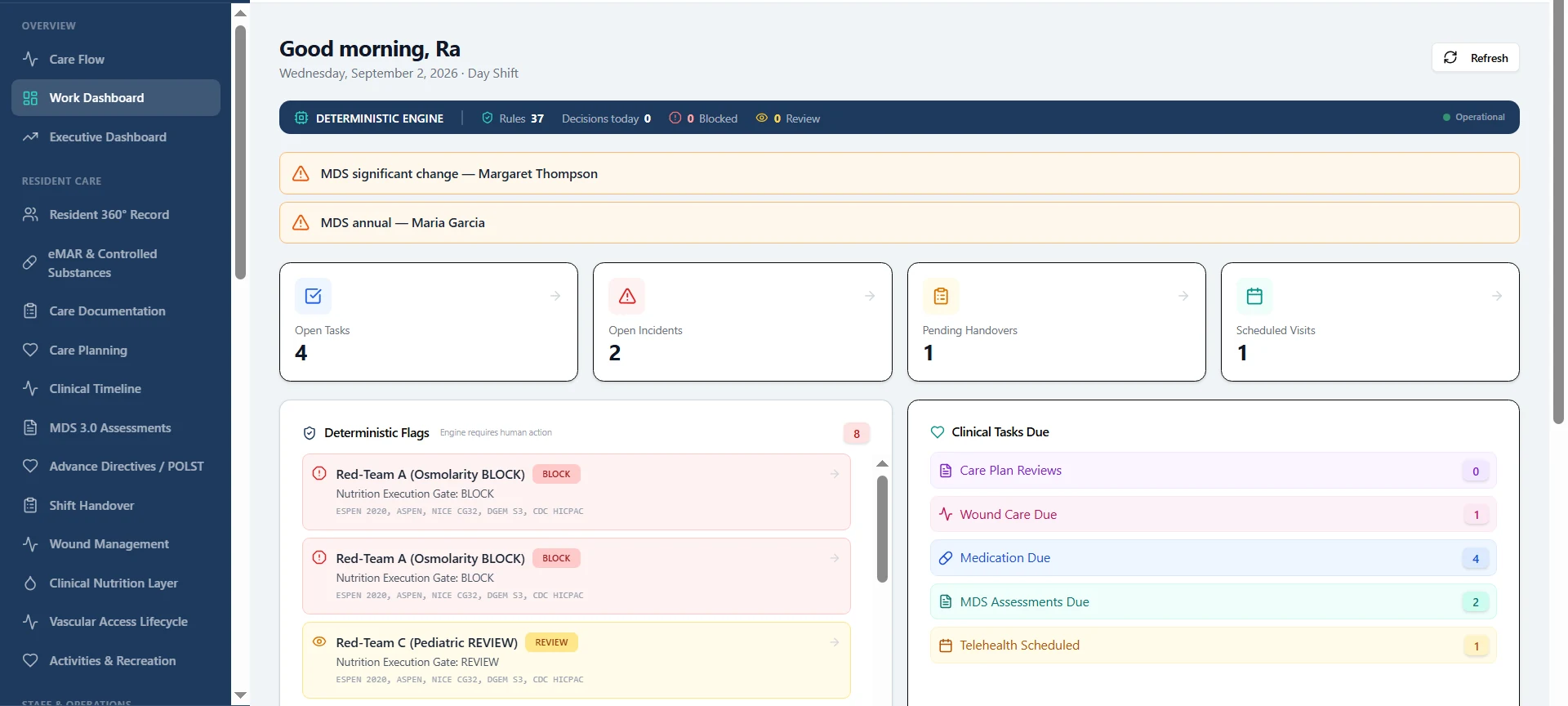
Work may be scheduled, newly required, changed, review-required, blocked, stale, overdue, superseded, resolved or completed. Those distinctions matter during a shift change because the next professional needs to know not simply what exists, but what changed, what remains blocked and what needs review.
Zero-Loss Handover
Zero-Loss Handover does not mean exposing every piece of information to everyone. It means that open, changed, blocked and safety-relevant states must not disappear because a shift changes.
AI may help by turning a large amount of information into a readable narrative. But narrative AI does not replace the deterministic work states or their provenance.
Responsibility needs its own explicit, traceable state.
Learn more about BestCura
More feature articles and background are available in the BestCura Press & Insights Center. This article explains BestCura system logic and does not replace individual medical or legal advice.